

A modern rendering of Sisyphus in which progress is never final.
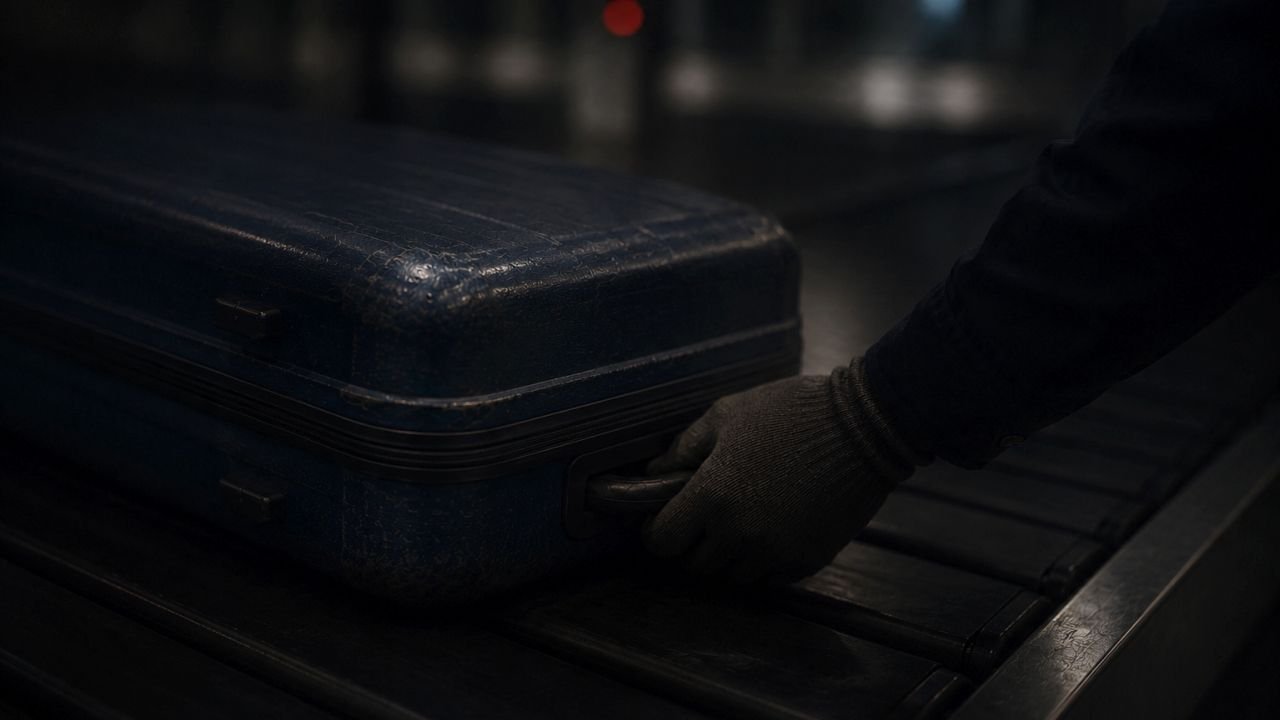
The conveyor belt hums under my palms as the next container arrives.
The strap of the duffel bag is nylon, frayed at the edges, and bites into the webbing between my thumb and forefinger. I heave. The weight is dead, unbalanced, shifting as the contents — bottles, shoes, heavy unseen masses — slide toward one corner. I swing it onto the steel lip of the intake. The metal is cold, sucking the heat out of my skin through the thin layer of my gloves.
The belt moves three inches. Stop.
I reach for a hard-shell case. It’s blue, scuffed with white streaks from concrete or cargo holds. The handle is stuck in the retracted position. I have to hook my fingers into the gap and pull until the plastic edges press into my joints. My knuckles ache with a dull, throbbing heat. I pull. The case resists, then gives, sliding across the rollers with a dry, screeching sound that vibrates up my forearms.
The pile on the left is high. It reaches the yellow safety line on the wall. Twenty-two bags. I tag the blue case — 0442 — and shove it toward the scanner curtain. The heavy rubber flaps of the curtain slap against the plastic.
The belt moves three inches. Stop.
My lower back tightens, a sharp horizontal line of pressure just above the belt of my trousers. I reach for a backpack. It’s damp. The fabric is cold and smells of stale rain. I lift it.
The monitor shows the queue. The bar is at eighty percent. If I move the next four bags quickly, the intake will clear. I grab a leather satchel. The leather is oily. My grip slips once, twice, before I pin it against my chest to haul it up. The throb in my knuckles intensifies, a steady, pulsing warmth that matches the hum of the overhead fans.
I look at the exit. The heavy steel door is ten feet away. It’s unlocked. Through the small reinforced window, the tarmac is visible, flooded with white light from the terminal pylons. A fuel truck is driving past. The door is right there.
The belt moves three inches. Stop.
I pick up a heavy, oversized trunk. It has no wheels. I have to crouch, my knees popping, and hug the bulk of it. The textured plastic scrapes against my forearms. I heave it onto the scale. The numbers flicker.
The red light on the scanner begins to flash. The pile on the belt has reached the sensor limit.
A mechanical groan echoes through the small room. The rollers reverse. The bags I just loaded — the blue case, the leather satchel, the damp backpack — emerge from behind the rubber curtain. They slide backwards, tumbling down the incline, piling back into the staging area where I started. The hard-shell case hits the floor with a hollow crack.
The throb in my knuckles is sharp now. I flex my hand. The heat is still there, stable and persistent.
I walk to the floor and pick up the blue case. The white scuffs are the same. I hook my fingers into the recessed handle. The plastic edges press into the same grooves in my skin. I lift. I swing it onto the steel lip. The metal is still cold.
The belt moves three inches. Stop.
I reach for the leather satchel. It is still oily. I pin it to my chest. I move it. The monitor resets to zero. I tag it — 0442.
The door to the tarmac remains in the periphery. The fuel truck is gone now, replaced by a baggage cart. The door is ten feet away.
I reach for the backpack. Dampness has soaked through my glove to the tip of my index finger. The cold settles against the dull heat of the knuckle ache. I lift.
The pile on the left is beginning to grow again. I move a vanity case. I move a duffel bag.
The belt moves three inches. Stop.
The throb in my knuckles pulses. One, two, three. I reach for the next handle. It is a large, black suitcase with broken wheels. I brace my feet. The rubber of my soles grips the floor. I pull. The weight shifts. The screeches of the rollers vibrate through my bones.
The scanner light is green. I shove the black suitcase through the flaps.
The belt moves three inches. Stop.